
10 Most Common SEO Mistakes to Avoid (And How to Fix Them)
Blog
July 20, 2026
407 views
Super Admin
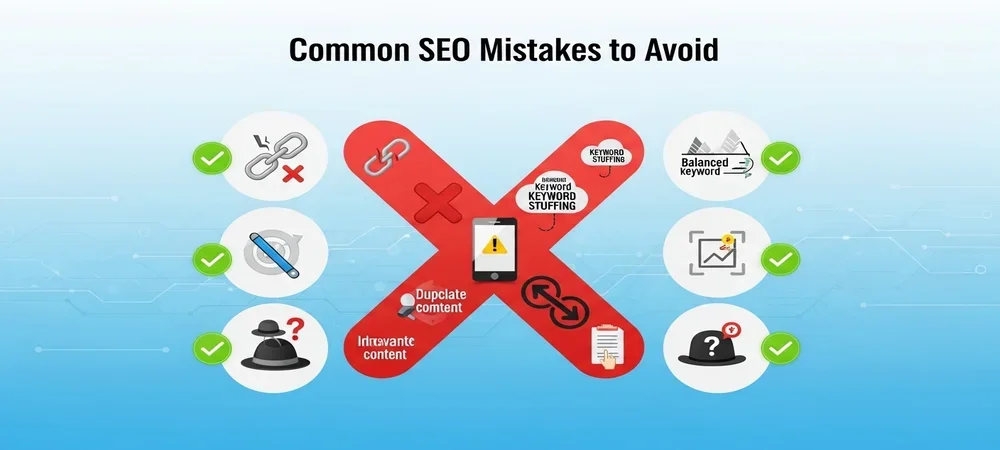
Even small SEO mistakes can reduce your website's visibility, lower search rankings, and cost you valuable organic traffic. From targeting the wrong keywords and publishing thin content to ignoring technical SEO and mobile optimization, these common errors can limit your site's performance. In this guide, we'll cover the 10 most common SEO mistakes, explain why they matter, and show you practical ways to fix them for better search engine rankings and long-term growth.
Introduction
SEO isn’t just about keywords, rankings, and traffic. It is about building a website or creating content that search engines can understand and that users will love. But even great websites can struggle to rank if they make a few common SEO mistakes.
Things like using the wrong keywords, slow-loading pages, or not making your site mobile-friendly can hurt the performance and prevent you from reaching your goals.
In this guide, we’ll explore 10 SEO mistakes to avoid and show you exactly how to fix them. Whether you’re running a blog, online store, or business website, avoiding these mistakes will help you show up higher on Google and attract the right audience.
Key Takeaways:
Make sure your content matches what people are looking for, whether they need information, want to buy something, or are looking for a service.
Check your website every month to find and fix problems such as broken links, slow pages, or other technical issues.
Since Google looks at your mobile site first, make sure yours work well on phones and loads quickly on all devices.
Write in a way that's easy to read. Use different words that mean the same thing instead of repeating the same keyword over and over.
Try to obtain links from trusted, relevant websites to enhance your site's credibility and improve your search engine rankings.
Update old content regularly to keep it fresh, improve your search engine rankings, and attract new visitors.
Utilize tools like Google Analytics 4 and Google Search Console to monitor your websites performance, identify areas for improvement, and track your SEO objectives.
Make sure your content shows experience, expertise, trust, and authority to meet Google’s E-E-A-T standards and rank higher.
What Are the Most Common SEO Mistakes Businesses Make?
The most common SEO mistakes include ignoring search intent, keyword stuffing, neglecting technical SEO, and ignoring mobile optimization. Regular audits, fresh content updates, and performance tracking with tools like Google Analytics and Search Console can help avoid these issues. Yet, many businesses fail because they focus on the wrong priorities or do not keep up with evolving SEO trends
The 10 Most Common SEO Mistakes (Explained Step-by-Step)
In this section, we’ll break down the 10 most common SEO mistakes to avoid — and show you exactly how to fix them. Each mistake includes a quick explanation and a practical solution to help you refine your SEO strategy and improve your rankings.
Mistake #1 – Ignoring Search Intent
Why It’s a Problem
One of the most common SEO mistakes is not thinking about search intent. Search intent simply means what someone is really looking for when they search online. Are they looking for answers, wanting to make a purchase, or searching for a specific business entity? If your content doesn’t match what people want, it won’t show up in search results.
How to Fix It
Ensure you understand what people want when they search. Use tools like Google Search Console (GSC) and Semrush to understand search intent. Create content that answers questions or helps people find what they need.

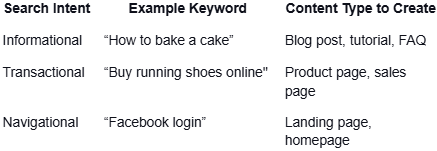
To help you understand search intent better, here's a simple chart showing different types of search intent and what kind of content works best for each one:
Search Intent Classification Table:
Mistake #2 – Overlooking Technical SEO
Why It’s a Problem
Technical SEO issues can hurt your visibility and negatively impact user experience. Factors such as slow page speed, broken links, and missing site maps make it difficult for Google to find and rank your pages.
How to Fix It
Regularly check your site for technical issues. Use tools like Screaming Frog and Ahrefs to identify issues and fix them. Ensure your website loads quickly, works well on mobile devices, and is easy for Google to read.
Mistake #3 – Not Optimizing for Mobile Users
Why It’s a Problem
More than 60% of people search on their phones. If your website isn’t set up for mobile users, you’re missing out on lots of visitors. Google also considers mobile optimization for ranking a website.
How to Fix It
Ensure your website functions smoothly on mobile devices. Use Google’s Mobile-Friendly Test to check if your site is easy to use on mobile. Also, check your website’s speed using tools like PageSpeed Insights.
Mistake #4 – Keyword Stuffing
Why It’s a Problem
Some people believe that using too many keywords will help their site rank better. However, keyword stuffing makes your content sound unnatural and less helpful. Google will lower your ranking if it sees this.
How to Fix It
Don't overuse keywords. Instead, use related words and phrases in a natural way. Focus on writing for people, not search engines, and make your content easy to read.
Mistake #5 – Neglecting Content Quality and Depth
Why It’s a Problem
If your content is short or lacks sufficient information, it won’t perform well in search results. Google wants to see detailed and helpful content (Search Engine Journal. (2026).
How to Fix It
Write in-depth content that gives people valuable information. Add examples, expert quotes, and data to support what you’re saying. The more helpful and detailed your content, the better it will rank.
Mistake #6 – Poor Internal Linking
Why It’s a Problem
Internal links help Google find all the pages on your site. If your internal linking is weak, Google may miss some pages, and users may not find related content, which can harm both user experience and rankings.
How to Fix It
Make sure you link to related pages on your site. Use descriptive anchor text (the clickable words) to help people and Google understand what the link is about. This makes it easier for Google to index and for people to explore more of your site.
Mistake #7 – Not Leveraging Analytics and Data
Why It’s a Problem
Without checking your data, you can’t know if your SEO is working (Gargano, E., 2026). Many businesses overlook tracking important factors, such as the amount of traffic they receive or which pages are performing the best.
How to Fix It
Use tools like Google Analytics 4 (GA4) and Google Search Console (GSC) to track your website’s performance. Review key data, such as the number of visitors to your site, their average stay duration, and the most effective keywords.
Mistake #8 – Ignoring Local SEO (GMB Optimization)
Why It’s a Problem
If your business serves a local area, ignoring local SEO can be a huge mistake. Without it, you won’t show up in local searches or Google Maps, meaning you’ll miss out on nearby customers.
How to Fix It
Set up and optimize your (GMB) Google My Business Profile. Ensure your Name, Address, and Phone number (NAP) are consistent across all online platforms. Use local keywords in your content and try to get backlinks from local sources to improve your local SEO.
Mistake #9 – Forgetting About Backlinks (or Building Bad Ones)
Why It’s a Problem
Backlinks, or links from other websites to yours, are crucial for improving your search engine ranking. If you have bad backlinks, they can hurt your site’s reputation. If you don’t have enough backlinks, you may not rank well.
How to Fix It
Focus on getting high-quality backlinks from trusted websites. Do things like guest blogging and digital PR to earn high-quality links. Regularly check your backlinks using tools like Ahrefs and remove any bad ones.
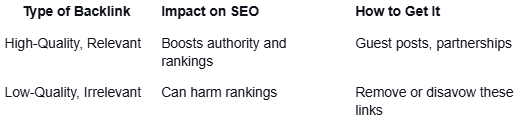
Backlinks are crucial for your website to rank better on search engines. Here’s a simple chart that shows the different types of backlinks and how they can help or hurt your site’s SEO:
Backlink Quality Table:
Mistake #10 – Not Updating or Repurposing Old Content
Why It’s a Problem
If your content hasn't been updated for a long time, it can become outdated, and people won’t want to read it. Google also prefers fresh, updated content.
How to Fix It
Update old blog posts with new information and data. Repurpose old content and use it in new formats, such as videos, infographics, or podcasts, to reach a broader audience. Keep your content fresh to maintain a higher ranking.
Bonus Tip:
Test your SEO ideas regularly. Search engines change rapidly, so don’t just think that what worked last year will still work now. Try out small changes every few months, like updating your titles, adding structured data, or refreshing your content. This will help increase the number of clicks you get
and the amount of time users stay on your website.
How to Track, Audit, and Measure SEO Performance Effectively
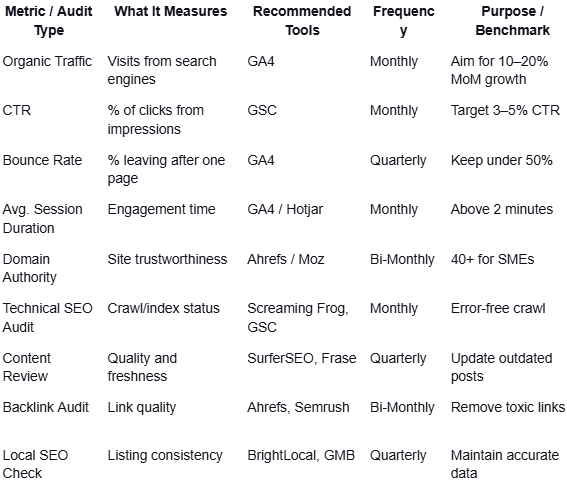
After addressing the common SEO mistakes discussed above, you should evaluate how well your website is performing. Keep track of your SEO progress and conduct regular checks to ensure your website performs optimally.
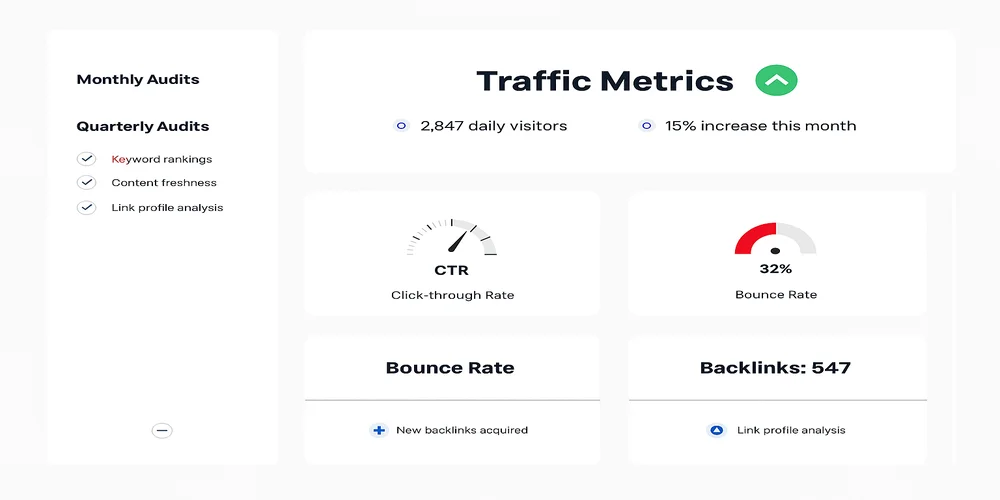
SEO KPI Tracking & Audit Frequency Framework
Real-World Case Studies: SEO Mistakes and Fixes
Case Study 1 — Real Estate Company in Dubai
Problem: A real estate company in Dubai was struggling to get its pages to rank at the top in search results. Even though they had good content, search engines couldn’t find their website, so they didn’t get much traffic.
Solution: The team checked their website and identified some issues with its setup. They fixed the sitemap and corrected the errors so search engines could find all the pages. After three months, their website appeared more frequently in search results, and traffic increased by 58%.
Case Study 2 — HatchTechs UAE Client
Problem: A client of HatchTechs UAE was using outdated SEO practices, like stuffing too many keywords into their content. This made the content sound unnatural and difficult to read, which negatively impacted their Google rankings.
Solution: The SEO experts helped improve content quality and addressed keyword stuffing issues. They rewrote the content so it sounded more natural and helpful. As a result, the site received 74% more traffic, and the bounce rate decreased by 30%, making the site easier to use and improving its ranking.
Case Study 3 — Global E-Commerce Brand
Problem: A large e-commerce brand noticed that a low number of people were clicking on their site. Their content was outdated and no longer aligned with what people were searching for, resulting in lost visitors.
Solution: The team updated over 50 blog posts, adding new information, fresh keywords, and improved visuals, including images and infographics. These updates led to a 40% increase in clicks and more people staying on the site longer, which helped them appear better in search results.
Conclusion
SEO isn’t something you do once and forget about — it’s something you keep working on. The common SEO mistakes we discussed can slow you down, but once you identify and address them, your website will perform better in search results and attract more visitors.
By avoiding these mistakes and making regular changes, your website will be able to grow and stay ahead in today's fast-changing world.
Take action now:
Fix these SEO issues on your site.
Start tracking how well your site is performing.
Keep checking your progress often.
Remember, SEO is about being consistent and making improvements over time. Continue to correct mistakes and refine your strategy for long-term success. It takes hard work, but the more you do, the better the results will be.